Deck Stair Repair in Annapolis: Loose Steps and Rails
A loose step or wobbly railing can point to trouble under your deck stairs. Learn when to close the stairs and what we check before recommending a repair.
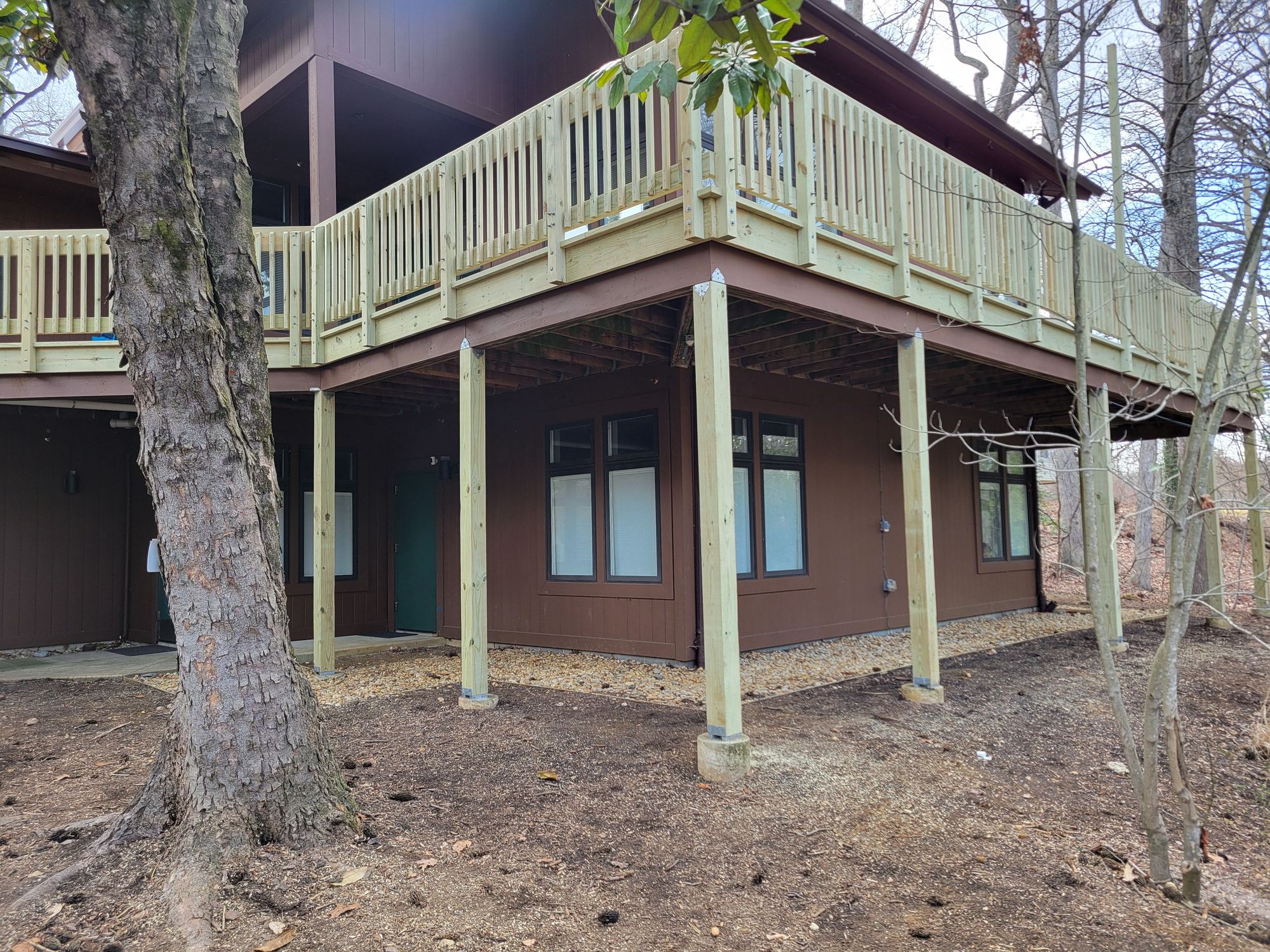
When to Stop Using Your Deck Stairs
If you’re looking for deck stair repair in Annapolis, start by closing off the stairs if a step shifts underfoot or the railing moves when you grab it. Use another entrance, let everyone in the household know, and call a deck repair professional. If you can block access from solid ground or from inside the house, do that without stepping onto the stairs.
A loose step can turn a routine trip to the yard into a fall. A wobbly deck stair railing takes away the support you’d reach for if your foot slipped. Around Annapolis, MD, wet leaves can cover the edge of a tread in late fall, and frost can make the first trip down in the morning especially slick. Get the stairs checked before winter weather makes those problems harder to spot.
What You Can Spot From Stable Ground
You can give us a useful description without walking the stairs again. Tell us where you first noticed the movement and whether it seemed limited to one step or affected the whole flight. From a safe vantage point, look for these signs:
- A raised tread corner or a gap beneath a board. The tread is the surface you step on. A visible gap can help us locate the problem, especially if it lines up with the spot where you felt the board move.
- A railing post leaning or pulling away at its base. A gap where the post meets the stairs or deck can point to a problem where it’s anchored. Let us know if you remember the post moving with the rail.
- Stairs pulling away at the top or sitting unevenly at the bottom. A gap at the deck or a tilted landing is worth mentioning, particularly if several steps started feeling different around the same time.
- Split or crumbling wood around fasteners. Look where the treads meet their supports and around the base of railing posts if those spots are visible. A photo from stable ground can help show us where you saw it.
Leave any load testing to the contractor. If you remember a tread rocking or a rail shifting, that’s enough information to make the call.
What We Check During Deck Stair Repair in Annapolis
We start our deck repair inspection by tracing the movement to its source. One loose tread and a set of stairs that shifts as a unit can feel surprisingly similar underfoot. They call for different work once we see what’s moving underneath.
Treads and the Stringers Below Them
Stringers are the framing members that run down the slope of the stairs and support the treads. When we look at loose deck steps, we check the board, its fasteners, and the wood those fasteners bite into. A fastener can back out of sound wood. It can also work loose because the wood around it has split or deteriorated. A new fastener needs sound material to hold.
We look closely at the notches where the treads sit and at both ends of the stringers. The upper attachment ties the flight to the deck framing, and the lower end needs firm support. Movement at either end can show up several steps away from the actual problem. We also check the landing for movement or settlement that could leave the first or last step uneven.
Handrails, Guards, and Post Connections
A handrail gives you something to grasp on the way up or down. A guard helps keep you from falling off an open side. On some stairways, the top of the guard also serves as a handrail. When the assembly wobbles, we check where the handrail attaches, how the posts are anchored, and whether the framing behind those connections is sound.
A loose handrail bracket on a solid post can be a contained repair. If the post itself shifts, the condition of the wood at its base matters just as much as the hardware. Sometimes we need to see behind a trim board or beneath the stairs to understand what’s happening at that connection.
When a Targeted Repair Makes Sense
We recommend a targeted repair when the damage is limited and the surrounding structure can support the work. That might mean replacing a split tread over sound stringers or securing a loose handrail connection where the post and framing are solid. We check the steps around the repair, too. A replacement tread should leave the rise from one step to the next consistent, including where the stairs meet the upper and lower landings.
Take a common example. One board rocks near its outer edge, while the steps beside it have felt solid. If we find sound wood underneath and secure connections at both ends of the flight, the repair may stay focused on that one tread. If we find neighboring treads loosening along the same split stringer, we repair the underlying support as part of the job.
A larger repair can make sense when several stringers have deteriorated, the upper connection has pulled away, or the landing has shifted. Sometimes the deck itself is sound and the stair flight is the part that needs rebuilding. If the framing where the stairs attach is also damaged, we include that area in the assessment so the repaired stairs have a sound place to connect.
Put Safety Ahead of the Finish
We repair unsafe components first. Once the structure is sound, we can talk about deck restoration if the stair boards and the rest of the deck are weathered. If the stairs are awkward to use and already need substantial work, deck remodeling gives us a chance to look at the layout and landing together.
Before we recommend a scope, we explain which parts can stay, which need work, and what we found at the connections. That gives you a clear basis for deciding how much work makes sense, whether it’s a single worn tread in Severna Park or a stair flight that’s started to shift in Edgewater.
Get Your Deck Stairs Checked Before Winter
We handle deck stair repair in Annapolis and around Anne Arundel County, including Arnold, Crofton, and Davidsonville. If a step shifts or the railing wobbles, keep the stairs closed and call us at 410-263-6270 or request an estimate online. We’ll look at what’s moving and explain whether a targeted repair is enough.
Frequently asked questions
Can I use deck stairs if only one step is loose?
Stop using the stairs if even one tread shifts, lifts, or rocks underfoot. A loose board can catch your toe, and the movement can come from the wood or fasteners underneath. Keep people off the whole flight and call a deck repair professional. Skipping the loose step can throw off your footing, especially when the stairs are wet.
What causes a deck stair railing to wobble?
The handrail may have loose brackets, or movement may come from a post, its fasteners, or the framing that anchors it. If the post moves along with the rail, we look closely at the base and the wood it connects to. Stop using the stairs and have a deck repair professional inspect the connection before anyone relies on the rail for balance.
Can a contractor replace one deck stair tread?
A single tread can often be replaced if the supporting stringers, their connections, and the rest of the flight are sound. We also check that the replacement board preserves consistent step heights and gives you a stable surface to land on. If the wood beneath that tread is soft or split, the repair needs to address the support as well.
How can I tell if my deck stair stringers are rotting?
From stable ground, look for crumbling wood, missing material, or splits around the notches that support the treads. The bottom ends and upper connections deserve a close look from a professional because damage can be hidden there. If you see deterioration or notice the stairs shift together, close the stairs and call a deck repair contractor for an inspection.
Should I repair loose deck stairs before winter?
Have loose stairs inspected before winter and keep them closed until a professional addresses the problem. Wet leaves and frost can make it harder to recover your footing, especially if the handrail moves when you grab it. An inspection can show whether the work is limited to a tread or rail connection or whether the stair framing needs repair.